The onboarding process for new agents in contact centers is often fraught with challenges, particularly during the critical nesting phase. This transitional period is where new hires move from theoretical training to real customer interactions, and it can significantly impact their long-term success. The stakes are high: organizations need to ensure speed to proficiency, maintain quality consistency, and prevent early attrition. Enter agent assist software with real-time QA scorecards, a solution designed to bridge the gap between classroom training and live customer interactions.
The Training-to-Floor Gap
Many agents grasp concepts during training but struggle to apply them effectively when faced with real customers. This disconnect can lead to costly attrition, quality issues, and supervisor burnout. The pressure of live calls, combined with performance anxiety, often overwhelms new hires, resulting in mistakes that could have been avoided with the right support. Traditional nesting methods, which rely heavily on supervisor monitoring, can fall short in providing the immediate assistance agents require during these high-stakes moments.
How Real-Time Agent Assist Works
Core Technology Components:
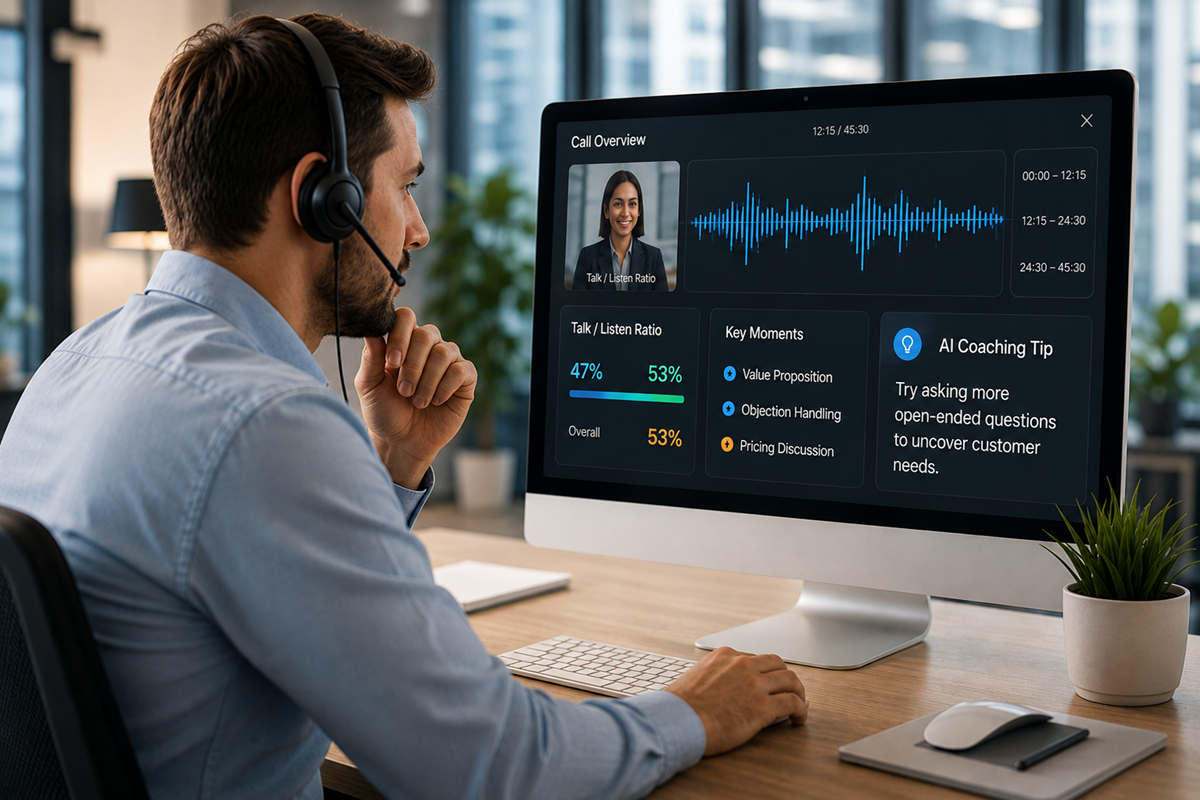
- Live Call Intelligence: Agent assist software utilizes real-time speech-to-text transcription to capture conversations, allowing the AI to analyze customer intent and emotional state.
- Dynamic Guidance Display: Relevant information, scripts, and compliance reminders are presented on the agent's screen during calls, ensuring they have the necessary tools at their fingertips.
- Knowledge Base Integration: The system surfaces product information and troubleshooting steps based on the context of the conversation, reducing hold times and knowledge searches.
In-Call Support for New Agents:
- Next Best Action Recommendations: As the customer speaks, the system provides real-time suggestions, helping agents navigate complex questions.
- Compliance Reminders: The software alerts agents before critical disclosures, minimizing the risk of regulatory violations.
- De-escalation Techniques: When customer sentiment shifts, the system suggests strategies to calm the situation, empowering agents to handle difficult interactions confidently.
This technology not only enhances the agent's ability to respond effectively but also alleviates the burden on supervisors, allowing them to focus on higher-value coaching activities.
Designing Agent Assist-Enabled Nesting Programs
Pre-Nesting Setup:
- Technology Configuration: Organize the knowledge base by call type and complexity, ensuring agents can easily access relevant information.
- Script Library Creation: Develop dynamic scripts with branching logic to guide agents through various scenarios.
- Quality Scorecard Integration: Incorporate real-time performance metrics to evaluate agent interactions and provide immediate feedback.
Agent Preparation:
- Screen Layout Familiarization: Train agents on how to navigate the agent assist interface, ensuring they feel comfortable using the technology.
- Guidance Interpretation Training: Teach agents how to leverage AI suggestions naturally, fostering confidence in their decision-making.
Common New Hire Scenarios & Agent Assist Support
Scenario: Unfamiliar Product Question
- Without Agent Assist: The agent puts the customer on hold to search for information, leading to increased handling time and customer frustration.
- With Agent Assist: The system detects the mention of a product and instantly surfaces relevant details, allowing the agent to respond confidently without delay.
Scenario: Customer Objection
- Without Agent Assist: The agent struggles to respond effectively, risking a lost sale or decreased customer satisfaction.
- With Agent Assist: The system recognizes objection patterns and displays proven responses, enabling the agent to select the appropriate rebuttal and enhance the customer experience.
Supervisor Efficiency & Performance Monitoring
Traditional vs. Agent Assist-Enabled Supervision:
| Feature | Traditional Supervision | Agent Assist Supervision |
|---|---|---|
| Number of Agents Monitored | 3-5 | 10-15+ |
| Real-Time Alerts | No | Yes |
| In-Call Coaching | No | Yes |
| Automated Quality Scoring | Time-Consuming | Instant |
| Pattern Identification | Limited | Comprehensive |
With agent assist technology, supervisors can monitor multiple agents simultaneously, receiving real-time alerts for those who need immediate support. This capability not only enhances the quality of coaching but also allows for a more efficient use of supervisory resources.
Frequently Asked Questions
Q: Will agents become dependent on agent assist and never develop true skills?
A: No, the graduated assistance approach reduces support over time, ensuring agents develop competence while benefiting from a safety net during the critical learning period.
Q: How does agent assist work for remote/virtual nesting programs?
A: Agent assist provides supervisors with real-time monitoring capabilities, ensuring remote agents receive the same level of support as in-office teams.
Q: Can agent assist replace supervisors during nesting?
A: No, it amplifies supervisor capabilities by handling routine guidance, allowing supervisors to focus on complex coaching and emotional support.
Q: How quickly can we implement agent assist for an upcoming training class?
A: Implementation typically takes 4-6 weeks for a pilot program, allowing time for optimization before full deployment.
Q: What happens to agent assist after nesting ends?
A: Agent assist continues to provide value throughout an agent's tenure, supporting ongoing development and handling new challenges as they arise.
In conclusion, leveraging agent assist software with real-time QA scorecards during the nesting phase not only enhances agent performance but also streamlines the supervisory process. By providing immediate, context-sensitive support, organizations can ensure their new hires transition smoothly into productive roles, ultimately improving customer satisfaction and reducing attrition.