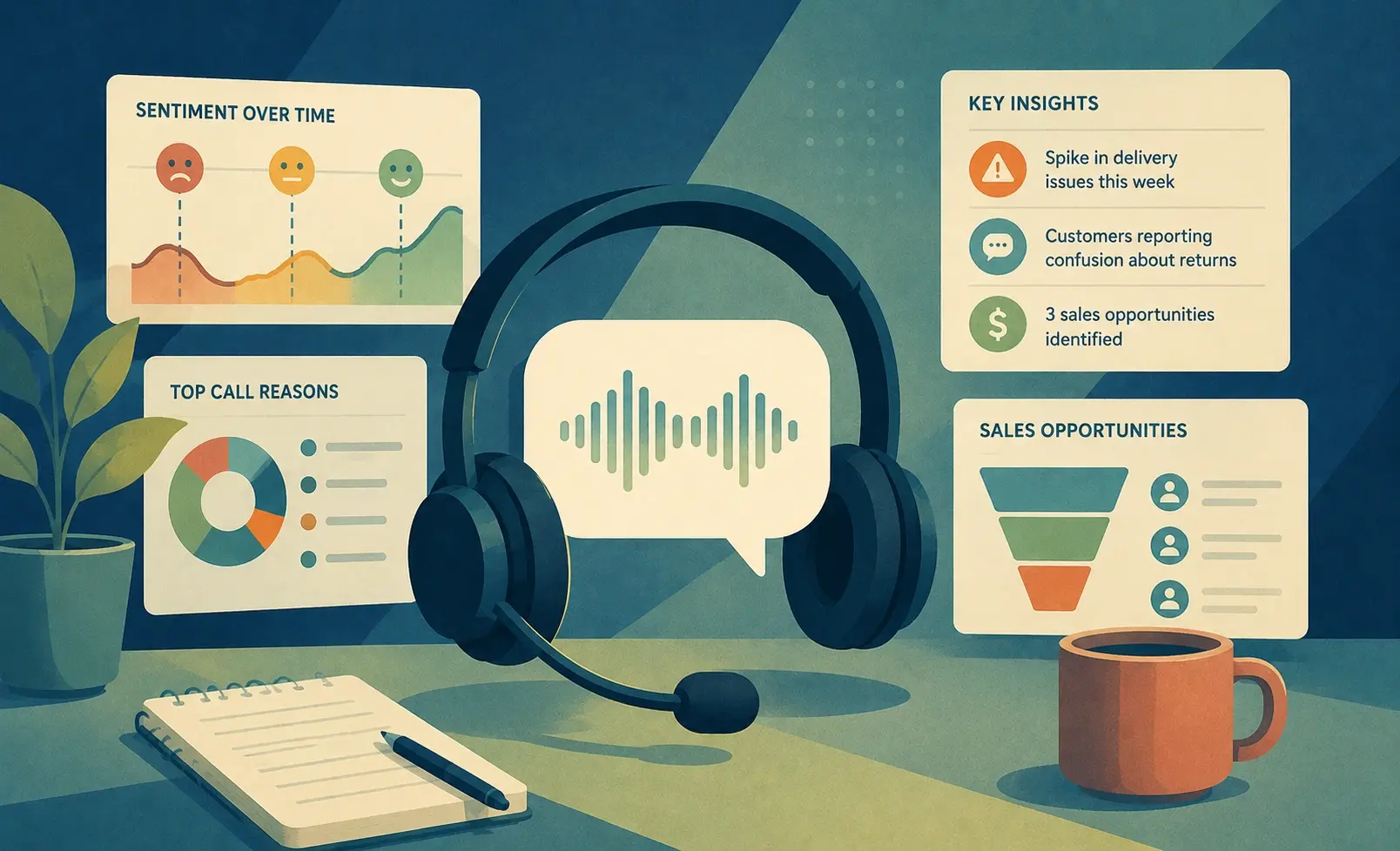
In today's fast-paced business environment, providing excellent customer service while managing time efficiently is crucial. Utilizing AI can significantly enhance this balance by automating routine tasks and offering valuable insights into customer interactions. This article will explore effective customer service tips that leverage AI to manage time without making customers feel rushed. By implementing AI-powered call analytics, customer-facing teams can evaluate conversations for sentiment and resolution effectiveness, ensuring that agents can focus on meaningful interactions. Additionally, AI can help identify upsell opportunities and recurring customer pain points, allowing for a more personalized and efficient service experience. Ultimately, integrating AI into customer service not only streamlines processes but also enriches the customer experience, fostering satisfaction and loyalty.
Customer Service Tips for Managing Time Without Rushing Customers Using AI
In today's fast-paced business landscape, managing customer service efficiently without making customers feel rushed is essential. By leveraging AI, customer-facing teams can enhance their service quality while optimizing time management. This article will delve into effective customer service tips that utilize AI to streamline processes, ensuring that every customer interaction is meaningful and productive.
One of the most effective ways to manage time without compromising customer experience is through AI-powered call analytics. Platforms like Insight7 automatically evaluate customer interactions, scoring them against custom quality criteria. This allows customer service agents to focus on high-value conversations while AI handles routine evaluations. By assessing sentiment, empathy, and resolution effectiveness, AI ensures that agents can dedicate their time to addressing complex customer needs rather than getting bogged down in administrative tasks.
Another critical aspect of using AI in customer service is its ability to provide actionable coaching insights. By continuously monitoring agent performance, AI can identify skill gaps and suggest targeted coaching recommendations. This not only helps agents improve their performance over time but also ensures that they are equipped to handle customer inquiries effectively. With AI's support, agents can spend more time engaging with customers and less time worrying about their performance metrics.
AI also plays a vital role in enhancing customer experience by uncovering recurring pain points and sentiment trends. By analyzing customer interactions, AI can identify common issues that lead to dissatisfaction or escalation. This intelligence allows customer service teams to refine their processes proactively, addressing customer concerns before they escalate. As a result, customers feel valued and understood, which fosters loyalty and satisfaction.
Moreover, AI can detect upsell and cross-sell opportunities in real time during customer interactions. When agents are equipped with insights about customer preferences and behaviors, they can make personalized recommendations that enhance the customer experience. This not only drives revenue but also ensures that customers feel that their needs are being prioritized, rather than being rushed through a sales pitch.
To further enhance the customer experience, organizations should implement custom evaluation templates that align with their internal frameworks. This ensures that AI-generated insights are relevant and actionable, allowing teams to focus on the most critical aspects of customer interactions. By tailoring evaluations to specific business needs, organizations can optimize their customer service processes without compromising quality.
In addition to these strategies, it is essential to maintain a human touch in customer service interactions. While AI can streamline processes and provide valuable insights, the emotional connection between agents and customers remains irreplaceable. Training staff to effectively use AI tools while emphasizing empathy and active listening can create a balanced approach that enhances both efficiency and customer satisfaction.
In conclusion, managing time in customer service without rushing customers is achievable through the strategic use of AI. By automating routine tasks, providing actionable insights, and enhancing training programs, organizations can ensure that every customer interaction is meaningful. The integration of AI not only streamlines processes but also enriches the customer experience, fostering loyalty and satisfaction in an increasingly competitive landscape.
Comparison Table
Comparison Table
| Feature/Capability | Insight7 | Traditional Methods |
|---|---|---|
| Call Evaluation | Automatically evaluates 100% of customer calls using AI. | Manual evaluations often miss key insights and are time-consuming. |
| Performance Management | Provides actionable coaching insights and tracks agent performance. | Relies on periodic reviews, which can overlook real-time performance. |
| Sentiment Detection | Detects customer sentiment and empathy in conversations. | Lacks real-time emotional analysis, leading to missed opportunities. |
| Upsell Opportunity Detection | Identifies upsell and cross-sell moments during interactions. | Often relies on agent intuition, which can be inconsistent. |
| Custom Evaluation Templates | Aligns scoring to internal frameworks for tailored insights. | Generic evaluation criteria may not address specific business needs. |
| Multilingual Support | Supports global conversations accurately across languages. | Limited to local languages, hindering global customer engagement. |
| Enterprise-Grade Security | GDPR and SOC2 compliant for data protection. | Security measures may vary, risking data privacy and compliance. |
Selection Criteria
Selection Criteria
When implementing AI in customer service to manage time without rushing customers, several selection criteria should be considered. First, the AI solution must provide comprehensive call evaluation capabilities, automatically analyzing 100% of customer interactions to ensure quality and consistency. The ability to detect sentiment and empathy is crucial, as it allows agents to prioritize emotional connections with customers. Additionally, the platform should offer actionable coaching insights to help agents improve over time, ensuring they are equipped to handle complex inquiries effectively.
Another important criterion is the solution's multilingual support, enabling organizations to engage with a diverse customer base without language barriers. Security compliance, such as GDPR and SOC2, is essential to protect sensitive customer data. Finally, the system should facilitate the identification of upsell opportunities in real-time, enhancing revenue while ensuring customers feel valued and understood.
Implementation Guide
To effectively manage time without rushing customers, leveraging AI in customer service is essential. AI-powered tools can automate routine tasks, allowing agents to focus on more complex interactions that require empathy and understanding. By utilizing AI for call evaluation, organizations can analyze 100% of customer interactions, ensuring quality and consistency while detecting customer sentiment and emotional cues. This enables agents to prioritize their responses based on the customer's emotional state, fostering a more personalized experience.
Additionally, AI can provide actionable coaching insights, helping agents improve their performance over time. With real-time detection of upsell opportunities during interactions, agents can engage customers meaningfully without feeling pressured to rush. This approach not only enhances customer satisfaction but also drives revenue growth, creating a win-win situation for both customers and businesses.
Frequently Asked Questions
Q: How can AI help manage time in customer service without rushing customers?
A: AI can automate routine tasks, allowing agents to focus on complex interactions that require empathy. By evaluating customer calls for sentiment and emotional cues, AI helps agents prioritize responses, ensuring customers feel valued without feeling rushed.
Q: What are the benefits of using AI for call evaluation?
A: AI-powered call evaluation analyzes 100% of customer interactions, delivering consistent quality insights. It detects sentiment and empathy, enabling agents to respond appropriately to customer emotions and improve service quality.
Q: How does AI support coaching and performance management?
A: AI generates actionable coaching insights from real conversations, tracks agent performance over time, and identifies skill gaps. This continuous feedback helps agents enhance their skills and manage customer interactions more effectively.
Q: Can AI help identify upsell opportunities during customer interactions?
A: Yes, AI can detect upsell and cross-sell opportunities in real time, allowing agents to engage customers meaningfully. This enhances revenue while ensuring customers feel understood and valued.
Q: What security measures should be considered when implementing AI in customer service?
A: It's essential to choose AI solutions that comply with security standards like GDPR and SOC2 to protect sensitive customer data and maintain trust.