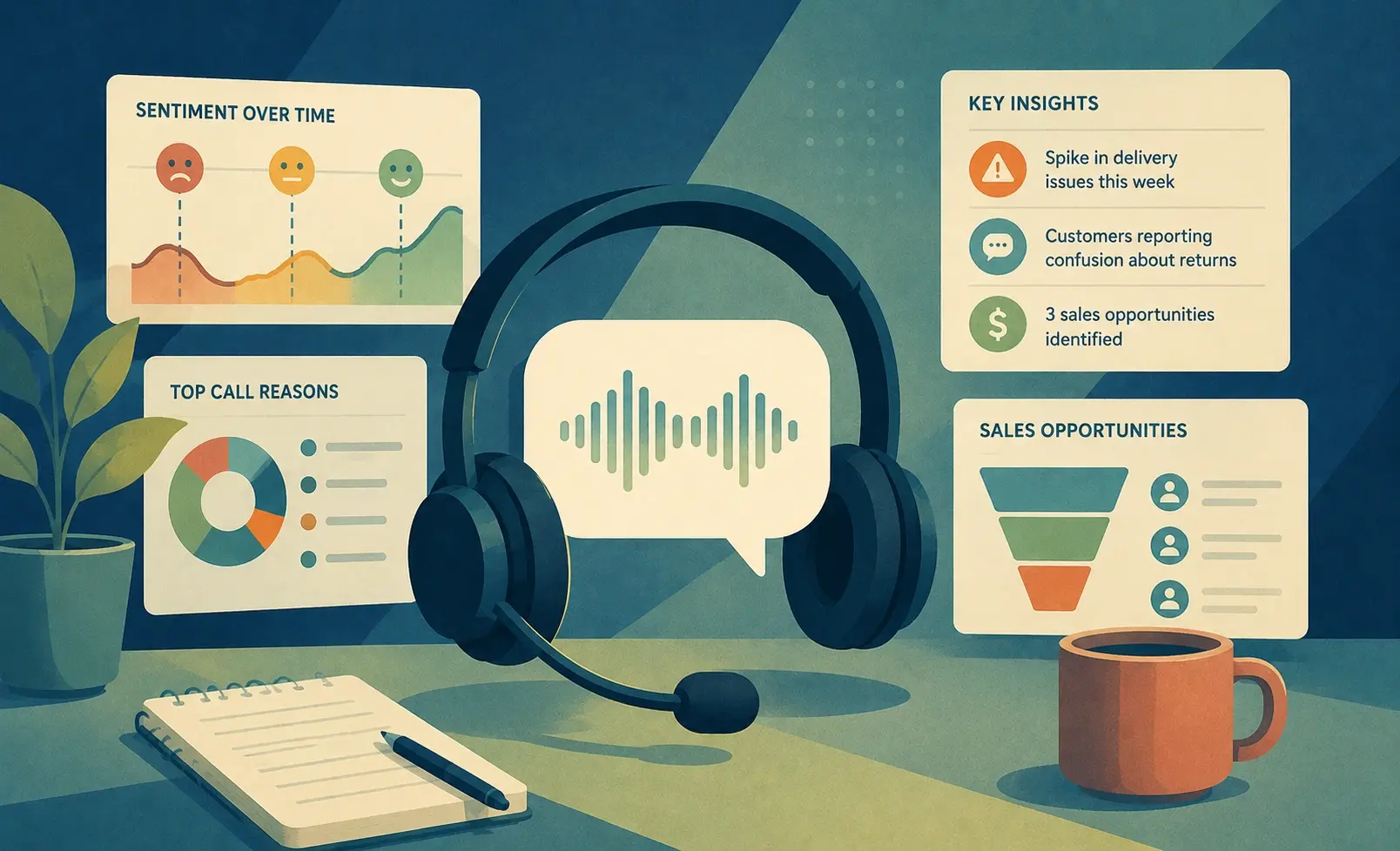
In today's fast-paced call center environment, the ability to organize information logically is crucial for agents to deliver exceptional customer experiences. With the integration of AI-powered tools, agents can efficiently manage and retrieve relevant data, enhancing their responsiveness and accuracy. This article will explore the essential skills call center agents need to effectively leverage AI, focusing on logical information organization. We will discuss how AI can assist agents in structuring information, identifying trends, and improving service quality, ultimately leading to better customer interactions and increased revenue opportunities. By mastering these skills, agents can transform each customer conversation into actionable insights that drive performance and growth.
As AI continues to reshape the call center landscape, agents must adapt by honing their organizational skills. This involves understanding how to categorize and prioritize information effectively, ensuring that they can access the right data at the right time. AI tools can automate the evaluation of customer interactions, providing agents with real-time feedback and insights into customer sentiment, empathy, and resolution effectiveness. This not only streamlines workflows but also empowers agents to focus on delivering personalized service. By embracing AI and developing strong organizational skills, call center agents can enhance their performance and contribute to a more efficient and customer-centric operation.
Essential Skills for Call Center Agents in the Age of AI
In the age of AI, call center agents must master the skill of organizing information logically to enhance their performance and improve customer interactions. This involves categorizing and prioritizing data effectively, allowing agents to access the right information at the right time. AI tools, such as Insight7's call analytics platform, can assist agents by automating the evaluation of customer interactions, providing real-time feedback on sentiment, empathy, and resolution effectiveness. By leveraging these insights, agents can streamline their workflows and focus on delivering personalized service, ultimately transforming each customer conversation into actionable intelligence that drives performance and growth.
Organizing information logically with AI begins with understanding the structure of data. Agents need to be adept at identifying key pieces of information that are relevant to customer inquiries. This means being able to sift through vast amounts of data quickly and efficiently. AI can help by scoring interactions against custom quality criteria, enabling agents to prioritize which information is most pertinent to the customer’s needs. For example, if a customer expresses frustration during a call, AI can highlight previous interactions and sentiment trends, allowing the agent to address the issue more effectively.
Moreover, AI-powered tools can provide agents with performance dashboards that visualize trends across teams. This data visualization helps agents understand their performance metrics and identify areas for improvement. By tracking their progress over time, agents can pinpoint skill gaps and receive targeted coaching recommendations. This continuous feedback loop not only enhances individual performance but also contributes to the overall effectiveness of the customer support team.
Another critical aspect of organizing information logically is the ability to detect upsell and cross-sell opportunities in real-time. AI can analyze customer interactions to identify moments when a customer may be receptive to additional products or services. By equipping agents with this information, they can engage customers in meaningful conversations that drive revenue while also enhancing customer satisfaction. This proactive approach to customer service not only improves the agent's performance but also fosters a more positive customer experience.
Furthermore, the multilingual support offered by AI tools ensures that agents can effectively communicate with a diverse customer base. This capability is essential in a globalized market where customers may speak different languages. By organizing information logically and utilizing AI to bridge language barriers, agents can provide consistent and high-quality service to all customers, regardless of their linguistic background.
In summary, the integration of AI into call center operations is revolutionizing the way agents organize information. By mastering the skill of logical information organization, agents can enhance their responsiveness, improve service quality, and ultimately drive revenue growth. As AI continues to evolve, agents who embrace these tools and develop their organizational skills will be well-positioned to thrive in the competitive landscape of customer service. The future of call centers lies in the ability to turn every customer interaction into actionable insights, and with AI as a powerful ally, agents can achieve this goal with greater efficiency and effectiveness.
Comparison Table
Comparison Table
| Feature/Skill | Organizing Information Logically with AI | Traditional Methods |
|---|---|---|
| Efficiency | AI automates data retrieval and analysis, enabling agents to access relevant information quickly. | Manual data sorting can be time-consuming and prone to human error. |
| Real-Time Insights | AI provides immediate feedback on customer sentiment and interaction quality, allowing for quick adjustments. | Insights are often gathered post-interaction, delaying response time. |
| Performance Tracking | AI tools visualize trends and track agent performance continuously, identifying skill gaps for targeted coaching. | Performance reviews are typically periodic, lacking real-time data. |
| Upsell Opportunities | AI detects potential upsell moments during interactions, equipping agents with timely suggestions. | Agents may miss opportunities due to lack of immediate data or insights. |
| Multilingual Support | AI can evaluate and assist in multiple languages, ensuring effective communication with diverse customers. | Language barriers can hinder service quality and customer satisfaction. |
| Consistency in Quality Assurance | AI delivers unbiased evaluations across all interactions, ensuring consistent service quality. | Quality assurance relies on subjective human evaluations, which can vary. |
| Data Categorization | AI categorizes and prioritizes information based on relevance, streamlining the workflow. | Agents must manually sift through data, increasing the risk of oversight. |
Selection Criteria
Selection Criteria
When evaluating call center agents, the ability to organize information logically with AI is essential. Agents must efficiently categorize and prioritize data to access relevant information swiftly, enhancing customer interactions. Proficiency in AI tools, such as Insight7's analytics platform, allows agents to automatically evaluate customer calls, scoring interactions based on quality criteria and sentiment analysis. This capability not only streamlines workflows but also empowers agents to focus on delivering personalized service.
Moreover, agents should demonstrate adaptability in using AI insights to identify upsell opportunities in real-time, ensuring they can engage customers effectively. Continuous performance tracking through AI dashboards enables agents to recognize skill gaps and receive targeted coaching, fostering ongoing improvement. Ultimately, agents who can leverage AI to organize information logically will significantly enhance service quality and drive revenue growth.
Implementation Guide
Implementing AI in call centers significantly enhances agents' ability to organize information logically, which is crucial for effective customer interactions. By leveraging AI-powered tools like Insight7, agents can quickly retrieve and analyze relevant data, improving response times and overall service quality. AI automates the evaluation of customer calls, scoring interactions based on quality criteria and sentiment analysis. This allows agents to focus on delivering personalized service while AI categorizes and prioritizes information based on relevance.
Moreover, AI provides real-time insights, enabling agents to identify upsell opportunities during conversations. Continuous performance tracking through AI dashboards helps agents recognize skill gaps and receive targeted coaching, fostering ongoing improvement. Ultimately, agents proficient in organizing information logically with AI will enhance customer satisfaction and drive revenue growth.
Frequently Asked Questions
Q: What skills do call center agents need to organize information logically with AI?
A: Call center agents should be proficient in using AI tools to categorize and prioritize data efficiently, enabling quick access to relevant information. Skills in sentiment analysis and real-time insights are also crucial for enhancing customer interactions.
Q: How does AI help agents improve their performance?
A: AI automates the evaluation of customer calls, scoring interactions based on quality criteria and sentiment. This allows agents to focus on personalized service while continuously tracking their performance and identifying skill gaps for targeted coaching.
Q: What role does continuous performance tracking play in agent development?
A: Continuous performance tracking through AI dashboards helps agents recognize their strengths and weaknesses, enabling them to receive tailored coaching and improve their skills over time.
Q: Can AI assist in identifying upsell opportunities during customer interactions?
A: Yes, AI provides real-time insights that help agents identify upsell and cross-sell opportunities during conversations, enhancing customer engagement and driving revenue growth.
Q: Why is organizing information logically important for call center agents?
A: Organizing information logically allows agents to respond quickly and effectively to customer inquiries, improving service quality and overall customer satisfaction.