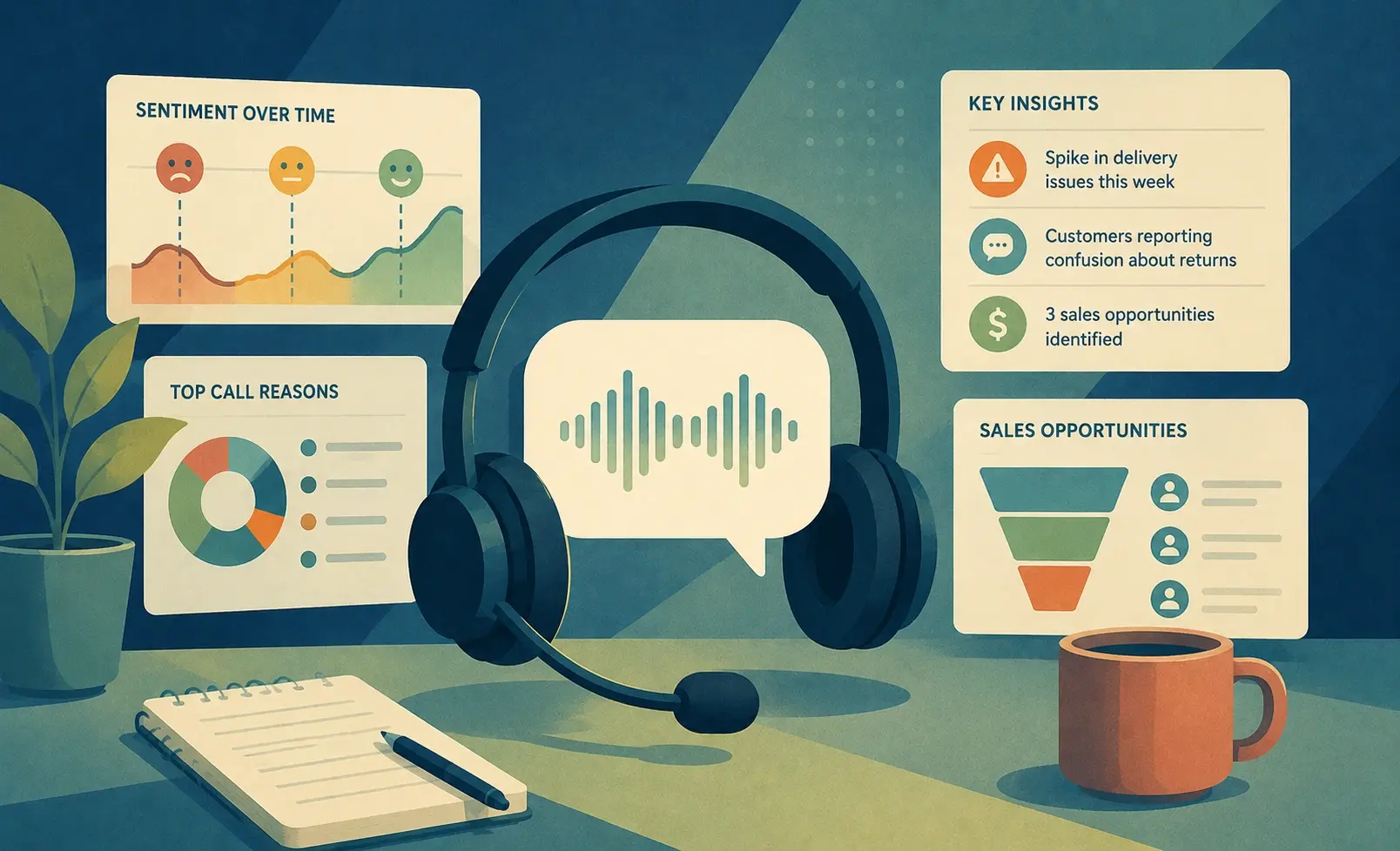
In today's fast-paced customer service landscape, effective call center agent skills training is essential for enhancing performance and customer satisfaction. Leveraging AI technology can significantly improve the structuring of explanations during training, allowing agents to receive real-time feedback and personalized coaching. This approach not only helps identify skill gaps but also enhances agents' ability to communicate empathetically and effectively. By utilizing AI-powered call analytics, organizations can evaluate every customer interaction, uncover insights, and refine training programs to ensure agents are equipped to handle diverse customer needs. This article will explore how AI can transform call center training, focusing on actionable strategies for integrating AI into skill development and performance management.
As customer expectations continue to rise, the integration of AI in training programs becomes a vital tool for organizations aiming to stay competitive and deliver exceptional service.
Essential Skills for Call Center Agents Using AI
In the evolving landscape of customer service, effective call center agent skills training is crucial for enhancing both agent performance and customer satisfaction. Utilizing AI technology can significantly aid in structuring explanations during training, enabling agents to receive real-time feedback and personalized coaching. This approach not only helps identify skill gaps but also enhances agents' ability to communicate empathetically and effectively. By leveraging AI-powered call analytics, organizations can evaluate every customer interaction, uncover insights, and refine training programs, ensuring agents are well-equipped to handle diverse customer needs.
AI plays a transformative role in call center agent skills training by automating the evaluation of customer interactions. With the ability to analyze 100% of calls, AI can score interactions based on custom quality criteria, detecting elements such as sentiment, empathy, and resolution effectiveness. This consistent and unbiased evaluation provides a solid foundation for coaching and performance management. For instance, AI can generate actionable insights from real conversations, allowing managers to track agent performance over time and identify specific areas for improvement.
One of the key benefits of using AI in training is its capacity for personalized coaching. By analyzing past interactions, AI can suggest targeted coaching recommendations tailored to each agent's unique skill gaps. This personalized approach not only accelerates the learning process but also fosters a more engaged and motivated workforce. Agents can receive immediate feedback on their performance, helping them to refine their communication skills and adapt their approaches to better meet customer needs.
Moreover, AI can enhance the overall customer experience by uncovering recurring pain points and sentiment trends. By identifying drivers of satisfaction and escalation in real time, organizations can make informed adjustments to their service processes. This proactive approach not only improves service quality but also opens up opportunities for upselling and cross-selling during customer interactions. Agents trained with AI insights are better positioned to recognize these opportunities, ultimately driving revenue growth.
Incorporating AI into training programs also addresses the need for multilingual support, allowing organizations to evaluate global conversations accurately. This capability is essential for companies operating in diverse markets, as it ensures that agents can communicate effectively with customers from various cultural backgrounds. By equipping agents with the skills to navigate these interactions, organizations can foster a more inclusive and responsive customer service environment.
To maximize the benefits of AI in call center training, organizations should focus on continuous improvement. Regularly updating training materials based on AI-generated insights ensures that agents are always learning and adapting to new challenges. Additionally, fostering a culture of feedback and open communication encourages agents to share their experiences and learn from one another, further enhancing the training process.
In conclusion, structuring explanations with AI in call center agent skills training offers a comprehensive solution for improving agent performance and customer satisfaction. By automating call evaluations, providing personalized coaching, and uncovering actionable insights, organizations can create a more effective training environment. Embracing AI technology not only enhances the skills of individual agents but also contributes to the overall success of customer service teams, ensuring they are equipped to meet the ever-evolving demands of customers.
Comparison Table
Comparison Table
When it comes to call center agent skills training, structuring explanations with AI offers distinct advantages over traditional methods. AI-powered platforms like Insight7 automatically evaluate 100% of customer calls, providing unbiased quality assessments that highlight areas for improvement. This contrasts with manual evaluations, which can be inconsistent and time-consuming. AI also delivers real-time feedback, enabling agents to refine their communication skills on the spot, while traditional training often lacks immediacy.
Moreover, AI identifies sentiment and empathy levels, allowing for targeted coaching recommendations tailored to each agent's unique needs. In contrast, conventional training may overlook these nuances. With multilingual support, AI ensures that agents can effectively communicate across diverse customer bases, a challenge for many traditional training programs. Overall, AI enhances the training process by making it more efficient, personalized, and responsive to the evolving demands of customer interactions.
Selection Criteria
Selection Criteria
When structuring explanations for call center agent skills training using AI, several selection criteria are essential to ensure effectiveness and relevance. First, the AI platform should automatically evaluate 100% of customer interactions, providing unbiased assessments that highlight areas for improvement. It must also detect sentiment, empathy, and resolution effectiveness, allowing for targeted coaching recommendations tailored to each agent's unique needs. Additionally, the platform should offer multilingual support to accommodate diverse customer bases, ensuring effective communication across various cultural contexts. Finally, the ability to generate actionable insights from real conversations is crucial, as it enables organizations to continuously refine training programs and enhance overall service quality. These criteria collectively contribute to a more efficient and personalized training environment for call center agents.
Implementation Guide
Implementation Guide
To effectively implement call center agent skills training using AI, organizations should focus on structuring explanations that enhance understanding and retention. Begin by utilizing AI-powered platforms like Insight7, which automatically evaluate customer interactions, providing unbiased assessments of agent performance. This allows for real-time feedback, enabling agents to refine their communication skills immediately.
Next, incorporate actionable insights derived from AI analytics to create personalized coaching recommendations tailored to each agent's unique needs. This targeted approach ensures that training is relevant and effective. Additionally, leverage AI's multilingual capabilities to accommodate diverse customer bases, ensuring agents can communicate effectively across various cultural contexts. Regularly monitor performance trends and adjust training programs based on evolving insights to foster continuous improvement and enhance overall service quality.
Frequently Asked Questions
Q: What skills are essential for call center agents?
A: Essential skills for call center agents include effective communication, empathy, problem-solving, and adaptability. These skills enable agents to handle customer inquiries efficiently and improve overall service quality.
Q: How can AI improve call center agent training?
A: AI can enhance call center agent training by automatically evaluating customer interactions, providing unbiased feedback, and generating actionable insights for personalized coaching. This ensures agents receive targeted training based on their performance.
Q: What role does sentiment analysis play in training?
A: Sentiment analysis helps identify customer emotions during interactions, allowing trainers to focus on areas where agents can improve empathy and responsiveness, ultimately enhancing customer satisfaction.
Q: How does multilingual support benefit call center training?
A: Multilingual support allows call center agents to communicate effectively with diverse customer bases, ensuring that language barriers do not hinder service quality and customer experience.
Q: Why is continuous performance monitoring important?
A: Continuous performance monitoring is crucial as it enables organizations to track agent improvement over time, identify skill gaps, and adjust training programs based on evolving insights, fostering a culture of continuous improvement.