AI Journey Mapping introduces a transformative approach to understanding the employee experience through exit interviews. Exit interviews are often underutilized, yet they provide rich insights into the reasons employees leave and their overall experience within the organization. By applying AI to analyze this data, companies can identify patterns and sentiments that inform a comprehensive journey map.
This process not only highlights key pain points but also uncovers opportunities for improvement. AI Journey Mapping turns qualitative feedback into quantitative insights, empowering organizations to enhance retention strategies and workplace culture. Through effective mapping, businesses can visualize the employee journey, fostering a deeper understanding of their team’s needs and aspirations.
Understanding the Link Between Exit Interviews and AI Journey Mapping
Exit interviews provide critical insights into employee experiences, offering valuable feedback that organizations can use for improvement. By analyzing the data collected during these interviews, patterns emerge that reveal key factors impacting employee satisfaction and retention. This is where AI Journey Mapping comes into play. AI tools can efficiently process abundant exit interview data, identifying trends and themes that might go unnoticed through manual review.
The integration of AI Journey Mapping enhances the ability to visualize the employee experience, mapping out each touchpoint from onboarding to offboarding. This visual representation helps organizations understand pain points and areas for enhancement, translating qualitative insights from exit interviews into actionable strategies. By bridging the gap between exit interviews and AI Journey Mapping, companies can better understand employee journeys, leading to improved workplace culture and retention efforts. Ultimately, harnessing AI in this way creates a more informed path towards organizational growth and employee satisfaction.
Analyzing Exit Interviews for Critical Insights
Analyzing exit interviews is a pivotal step in extracting critical insights that can drive organizational improvement. By examining the feedback provided by departing employees, companies can identify patterns and trends that may not be apparent from other data sources. These insights often reveal underlying issues, organizational culture dynamics, and employee sentiment, which are essential for enhancing workplace practices.
The process begins with careful data collection from exit interviews, emphasizing the need for a structured approach. Utilizing AI Journey Mapping tools can significantly streamline this analysis, transforming qualitative feedback into actionable data. By implementing these sophisticated tools, organizations can visualize the employee journey in a more meaningful way, allowing them to pinpoint improvement areas effectively. In doing so, businesses not only gain a deeper understanding of employee experiences but also foster a culture that values feedback, leading to lower turnover rates and improved staff morale.
Transforming Insights into Effective Journey Maps
Transforming insights into effective journey maps begins with a detailed examination of exit interview data. Exit interviews provide critical feedback, highlighting user experiences and pain points that can be mapped to enhance customer journeys. By utilizing AI journey mapping tools, organizations can analyze this feedback more efficiently, converting raw data into structured, visual frameworks.
To achieve this transformation, consider the following essential steps. First, collect and organize the exit interview data systematically, allowing for thorough analysis. Next, leverage AI tools to sift through qualitative feedback, identifying patterns and trends that may otherwise remain unnoticed. Finally, use these insights to create comprehensive journey maps that visualize the user experience, from initial engagement to subsequent decision-making. This streamlined approach not only highlights friction points but also informs strategic improvements for future interactions. By embracing this process, businesses can create engaging and user-centric experiences that foster long-term loyalty.
[optional] ## top ai tools for journey mapping from exit interviews
Insight7: A Leader in AI Journey Mapping
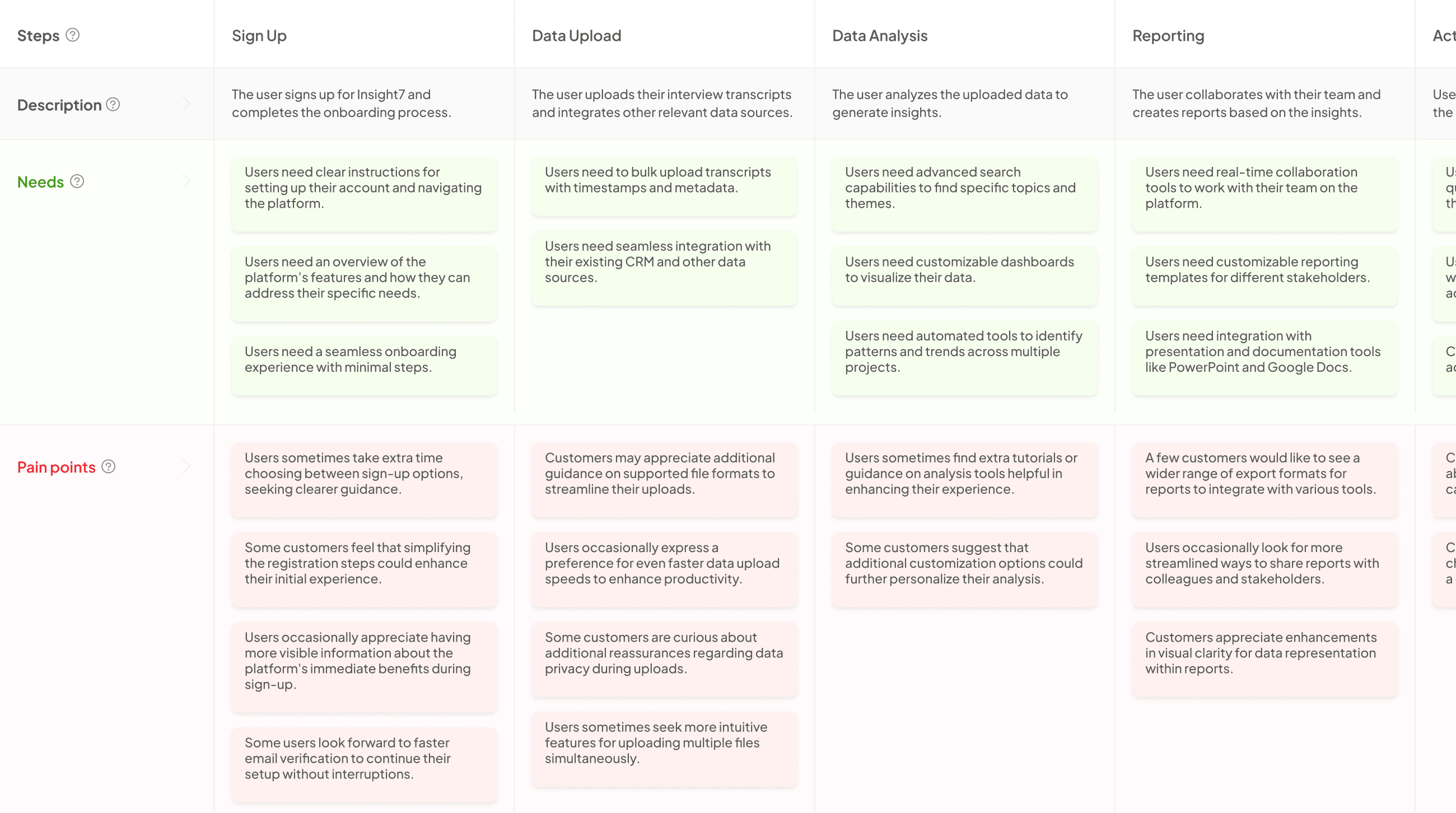
AI Journey Mapping has redefined how organizations interpret and utilize insights from exit interviews. By using sophisticated algorithms, leading AI tools can sift through vast quantities of qualitative data to unearth patterns and trends that might otherwise go unnoticed. This transformation positions businesses to create detailed and actionable journey maps that reflect the true sentiments of their workforce.
The AI-driven journey mapping process not only reveals pain points, desires, and behavioral insights but also democratizes the data analysis. Stakeholders at all levels can access the platform, gaining the ability to generate reports and visualize employee experiences without needing specialized training. Through this approach, organizations can take significant strides toward improving employee satisfaction and refining their onboarding processes. Embracing AI tools for generating journey maps empowers businesses to translate feedback into meaningful actions, ultimately enhancing the overall employee lifecycle and fostering a culture of continuous improvement.
Other Noteworthy Tools
When exploring AI journey mapping beyond the leading tools, a range of noteworthy options can enhance your analysis of exit interviews. Lucidchart stands out for its ability to visualize employee journeys clearly, helping teams to recognize pain points and positive experiences. This tool allows for easy integration of data, making it a valuable asset for visual thinkers.
Hotjar excels in feedback and behavior analysis, offering insights into how former employees interacted with the organization. Its heatmaps and recordings allow you to better understand user engagement throughout their journey. Smaply provides a comprehensive approach by integrating customer insights with journey maps, ensuring a holistic view of the customer experience. Meanwhile, UXPressia is ideal for creating interactive user journeys, making it easier to share findings with stakeholders. Finally, Miro’s collaborative platform fosters teamwork, enabling teams to co-create and refine journey maps in real time. These tools collectively provide essential resources for effective AI journey mapping.
- Lucidchart: Visualizing Employee Journeys
Lucidchart offers a powerful platform for visualizing employee journeys in a way that highlights key experiences and pain points. By utilizing this tool, organizations can transform data from exit interviews into insightful journey maps. These visualizations not only enhance understanding but also aid in identifying opportunities for improvement. With AI journey mapping, businesses can visualize various stages employees traverse, from onboarding to exit, thus fostering a comprehensive view of their experiences.
Creating these visual maps requires integrating feedback gathered from exit interviews, ensuring that the experiences are accurately represented. Lucidchart facilitates collaboration among teams, allowing for input from multiple stakeholders. Consequently, this leads to a more nuanced understanding of employee sentiment and engagement levels. By visualizing employee journeys, organizations can proactively address issues, ultimately driving retention and productivity. Understanding and implementing insights from exit interviews through such visualization tools can significantly enhance the overall employee experience.
- Hotjar: Feedback and Behavior Analysis
Analyzing user feedback and behavior is crucial for effective AI journey mapping. This tool allows organizations to gain insights from customer experiences, which can inform future strategies. By focusing on feedback from exit interviews, teams can identify patterns in user behavior and sentiment. Understanding where users feel positively and negatively about their experiences can guide improvements in services and communication.
Feedback analysis enables you to categorize responses into positive and negative sentiments. This understanding empowers teams to dig deeper into user motivations and concerns. For instance, extraction of key themes from exit interviews can reveal challenges in customer journeys. This can lead to the formulation of actionable strategies aimed at enhancing user satisfaction and retention. Utilizing AI to process and visualize this data not only streamlines the analysis but also helps in creating more accurate and user-centric journey maps.
- Smaply: Comprehensive Journey Mapping
In creating comprehensive journey maps, it's essential to visualize the customer experience effectively. Through the analysis of exit interview data, organizations can identify significant pain points and user needs at each stage of the journey. This approach allows businesses to transform raw feedback into clear visualizations that outline the entire experience, from the initial research phase to the final decision-making process.
Using advanced AI tools enhances this process by providing analytics and insights that guide decision-makers in addressing critical issues. As a result, companies can develop targeted recommendations for improvement, ultimately enhancing customer satisfaction. By mapping the customer journey meticulously, businesses can gain a deeper understanding of their clientele, leading to more informed strategies and improved service delivery. Embracing this form of AI journey mapping not only helps in creating effective maps but also informs better customer relationship management and product development.
- UXPressia: Interactive Tool for User Journeys
Utilizing advanced AI journey mapping tools can revolutionize how organizations create user journey maps. An interactive platform designed for this purpose brings user experiences to life, providing a visual representation of each step in the customer journey. By synthesizing data from exit interviews, users can identify crucial touchpoints, challenges, and opportunities for improvement within the overall experience.
These tools empower teams to visualize complex interactions in an engaging format, making it easier to comprehend user needs and pain points. They facilitate collaboration among stakeholders, ensuring everyone can contribute insights for more robust mapping. Furthermore, by using AI to analyze exit interview data, organizations can generate actionable recommendations, allowing for strategic enhancements to the customer experience. In a world where user satisfaction is key, leveraging such interactive tools becomes essential for any business aiming to understand and improve user journeys effectively.
- Miro: Collaborative Journey Mapping
Miro is designed to enhance collaborative journey mapping, making it easier for teams to visualize and analyze user experiences effectively. This interactive platform allows multiple stakeholders to participate in the journey mapping process, ensuring diverse perspectives are integrated into the final outcome. Through features like sticky notes and drawing tools, participants can outline user pain points and satisfaction levels at various touchpoints cohesively.
As an AI journey mapping tool, Miro aids in the transformation of exit interview data into intuitive visual representations. By streamlining the input and organization of feedback, teams can identify common trends and emerge with actionable insights. This collaborative environment not only promotes creativity but empowers teams to build robust journey maps that reflect the nuanced experiences of users throughout their journey. The shared understanding fosters improved decision-making, ultimately enhancing customer experiences overall.
Steps to Create AI-Driven Journey Maps from Exit Interviews
Creating AI-driven journey maps from exit interviews involves a systematic approach to harnessing insights gathered during employee departures. The first step is to collect and organize exit interview data, ensuring comprehensive transcripts are available. It’s essential to categorize information by themes and sentiment, as this forms the backbone of your analysis. After data organization, leveraging AI tools for data analysis enables you to uncover patterns and trends that might otherwise remain hidden.
Next, visualize the journey map using AI tools, which can transform raw data into clear, actionable visuals. These visuals illustrate employee experiences, highlighting pain points and opportunities for improvement. Through comprehensive visualization, you can better understand the employee lifecycle from onboarding to advocacy. This streamlined process not only enhances clarity but also aids in decision-making to improve organizational strategies effectively.
Step 1: Collecting and Organizing Exit Interview Data
Collecting and organizing exit interview data is a crucial first step in creating effective AI journey maps. Start by designing structured exit interview questionnaires that focus on pivotal experiences and sentiments from departing employees. This will help you gather rich qualitative data that sheds light on their journey within the organization. Use open-ended questions to encourage detailed feedback and capture valuable insights that may not emerge from closed questions.
Once data is collected, the next phase involves categorizing and prioritizing these insights. Group responses thematically to identify common trends and patterns relevant to employee experiences. Organizing this information enhances clarity and prepares it for in-depth analysis. By effectively structuring exit interview data, you set the foundation for AI journey mapping. This foundational step allows AI tools to analyze the data robustly, ultimately leading to actionable insights and improvements within your organization.
Step 2: Leveraging AI Tools for Data Analysis
AI Journey Mapping involves using advanced tools for thorough data analysis, particularly from exit interviews. This analysis is crucial in understanding employee experiences, sentiment, and pain points. By exploring the data, organizations can extract meaningful insights that guide the journey mapping process.
To effectively leverage AI tools for data analysis, consider these key steps:
- Data Gathering: Collect exit interview responses systematically to ensure comprehensive coverage.
- Sentiment Analysis: Utilize AI algorithms to identify positive and negative sentiments expressed in the feedback.
- Pattern Recognition: Analyze data for trends and commonalities across different responses and locations.
- Visualization Tools: Employ AI-driven platforms to translate data into visual journey maps that highlight critical touchpoints.
Implementing these strategies will enhance the quality of your AI Journey Mapping, ultimately fostering a better understanding of employee experiences and areas for improvement.
Step 3: Visualizing the Journey Map with AI Tools
Utilizing AI tools for visualizing the journey map is a transformative step in AI journey mapping. In this phase, the insights gathered from exit interviews are converted into visually engaging representations. By employing specific tools, organizations can identify key pain points, customer needs, and feedback trends in a more digestible format. This visualization enables decision-makers to comprehend complex data at a glance, making it easier to derive actionable strategies.
AI tools streamline this process significantly. They can aggregate data, highlight themes, and visually present the customer journey from onboarding to advocacy. These visualizations not only clarify the insights but also foster discussions and collaborative efforts among teams. Employing these tools effectively fosters a culture of continuous improvement and responsiveness to customer feedback, pivotal elements for maintaining a competitive edge in today’s fast-paced market.
Conclusion: Embracing AI Journey Mapping for Organizational Improvement
AI Journey Mapping has emerged as a transformative tool for improving organizational performance. By effectively synthesizing data gathered from exit interviews, this innovative approach provides clear insights into employee experiences and dissatisfaction. Identifying common pain points allows organizations to address issues directly and enhance employee retention strategies.
As organizations embrace AI Journey Mapping, they can create actionable roadmaps that foster a culture of feedback and continuous improvement. By adopting advanced AI tools, companies not only streamline data analysis but also empower decision-makers with visual representations of employee journeys, leading to informed and strategic improvements throughout the organization.